Utah Hunters Can Help Save California Condors This October
Southern Utah big game hunters heading into the Zion hunting unit this month have one more reason to think about what happens after the shot. The Utah Division of Wildlife Resources and The Peregrine Fund are asking hunters to take steps that can help protect California condors and other scavenging birds — and there’s an $800 outdoor equipment gift card up for grabs.
During October, the DWR will operate a check station where Zion unit hunters can enter the drawing by demonstrating that they are helping reduce the risk of lead poisoning in scavenging wildlife.

Hunters can enter by showing the lead-free ammunition they are using during their hunt or by providing proof that they removed all remains, including gut piles, from their harvested animals.
Checkpoint Located Near Coral Pink Sand Dunes State Park
The check station will be located at the intersection of Yellowjacket Road and Hancock Road, approximately 3.25 miles north of the entrance to Coral Pink Sand Dunes State Park. It will be open from 9 a.m. until dusk on Oct. 10-11, Oct. 17-19 and Oct. 24-25.

Hunters who cannot visit the check station can enter the drawing by bringing their lead-free ammunition or animal remains to the DWR’s Cedar City Office during regular business hours, Monday through Friday from 8 a.m. to 5 p.m.
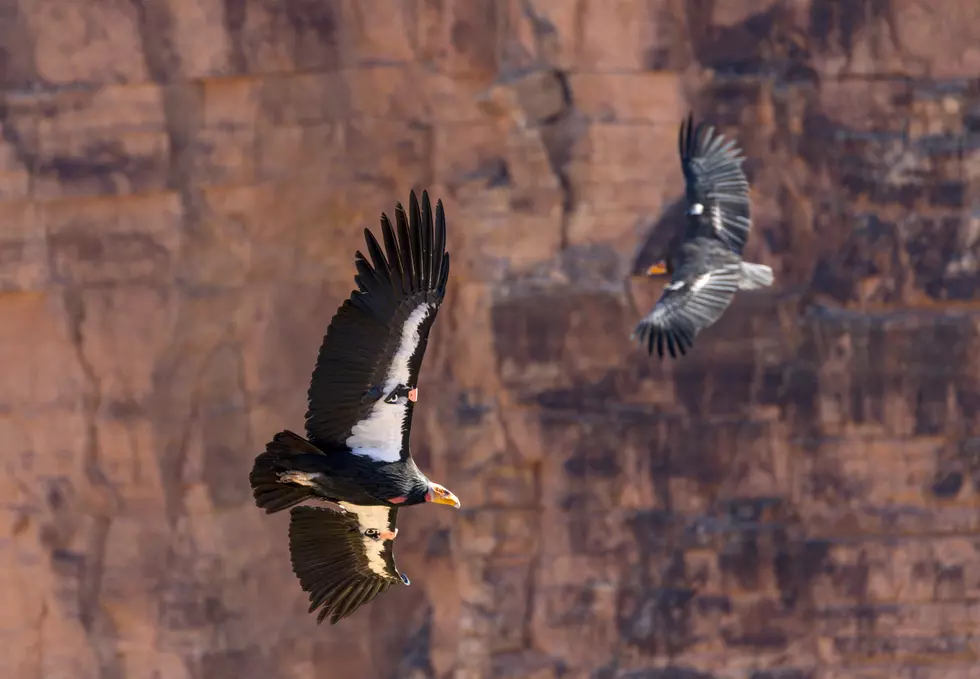
“The Hunters Helping Condors program launched in Utah in 2011 to help recover California condors,” DWR Southern Region Conservation Biologist Danielle Finlayson said in a press release. “These unique, enormous birds were listed under the precursor to the Endangered Species Act in 1967, and by 1982, only 23 were left in the world (one of which was in captivity). Due to the steep decline of the population, the remaining wild condors were captured and held in captivity for safekeeping, which gave rise to a successful captive breeding program that has allowed for the reintroduction of the endangered birds back to the wild.”
The California condor population has now grown to more than 500 birds, with more than half flying free in the wild. There are currently 95 condors in the wild Arizona/Utah population.

Condors, like eagles and hawks, play an important role in the ecosystem by consuming dead animals. Because condors feed exclusively on carrion, however, they can be poisoned by eating the remains of animals harvested with lead ammunition.
“Lead poisoning is the leading cause of death for free-flying condors in Utah and Arizona,” Finlayson said. “We are very grateful for all the hunters who are taking steps to prevent secondary impacts to scavenging wildlife, including eagles and California condors.”
Read More: Utah Hunters Heading To The Mountains
The DWR also provides hunters who draw an any-legal-weapon big game permit for the Zion Unit with a coupon for free or heavily discounted lead-free ammunition.

Because of increased California condor activity in the Panguitch area, the DWR is also encouraging hunters in the Panguitch Lake unit to use lead-free ammunition or pack out and properly dispose of big game gut piles where scavenging birds cannot access them.
States with the most registered hunters
Gallery Credit: Meagan Drillinger
More From Star 98